
Site Logo Delaware Health and Social Services

    Monthly Covid-19 Update – May 21, 2022: DPH Encourages Delawareans To Consider Masking In Public Amid Rising Covid-19 Cases

    DOVER, DE (May 21, 2022)– The Delaware Division of Public Health (DPH) reports an increase in COVID-19 cases since the previous monthly COVID-19 update released on April 22, 2022. While COVID-19 cases are increasing in Delaware, hospitalizations and deaths remain significantly lower when compared to the winter surge. DPH continues to encourage Delawareans to get tested if they exhibit symptoms of COVID-19 or have been exposed to someone who tested positive. Although there are no Delaware or federal government mask mandates, individuals are encouraged to mask in public indoor areas in Delaware. Delawareans are also reminded to get boosted to increase their individual protection against COVID-19. Staying up to date with your vaccinations is the best way to ensure your body is prepared to fight against severe cases of COVID-19.

    You are eligible for a booster dose if you:

    • Are 5+ and it has been 5 months after your second dose of Pfizer
    • Are 18+ and it has been 5 months after second dose of Moderna
    • Are 18+ and it has been 2 months since your initial dose of Johnson & Johnson
    • Qualified for an “additional/fourth” dose of Pfizer or Moderna because you have certain immunocompromising conditions or are age 50 and older. You can get your booster (fourth) dose 6 months after receiving your additional/third dose
    • Follow https://coronavirus.delaware.gov/vaccine/where-can-i-get-my-vaccine/#publichealth for locations to receive booster shots

    COVID-19 Cases and Hospitalizations:

    • Total positive cases since March 11, 2020: 271,294
    • 7-day daily average of new positive cases: 574.7, a difference of 417.6 average new positive cases reported since April 22, 2022
    • 7-day daily average for the percentage of total positive tests: 19.0 percentage points, a difference of 11.4 percentage points reported since April 22, 2022
    • Hospitalizations: 127, current hospitalizations; critically ill: 13
    • Total COVID-19 deaths: 2,939 an increase of 43 since last month
    • Total COVID-19 deaths reported since April 22, 2022: 43 deaths; 9 regularly reported deaths, 34 deaths from a review of vital statistics

    COVID-19 Vaccinations:

    • Total number of doses administered in Delaware: 1,805,255
    • Percentage of Delawareans 5+ who are fully vaccinated (CDC data): 73.6%
    • Percentage of Delawareans 12+ who are fully vaccinated (CDC data): 77.8%
    • Percentage of Delawareans 18+ who are fully vaccinated (CDC data): 79.3%
    • Percent of Delawareans who are fully vaccinated (CDC data): 69.5%

    All qualifying Delawareans should get vaccinated. For a location near you, visit de.gov/getmyvaccine.. Delaware’s latest COVID-19 vaccination statistics can be found under the Vaccine Tracker dashboard at de.gov/healtycommunity

    COVID-19 Case Vaccination Status Report:

    The following reports capture a weekly breakdown of non-boosted cases, deaths, and hospitalizations for the time frame of May 09– May 15, 2022.

    Weekly Overview

    (5/9/22– 5/15/22)

    # of Non-boosted Cases

    Total Non-boosted

    2406

    Total

    3464

    Percent of Non-boosted Cases

    69%

    Non-boosted Hospitalized cases

    # of Cases

    Total Non-boosted Hospitalized Cases

    127

    Total Hospitalized Cases

    179

    Percent of Non-boosted Cases

    71%

    Non-boosted Deaths

    # of Cases

    Total Non-boosted Deaths

    3

    Total COVID-19 Deaths

    5

    Percent of Non-boosted Deaths

    60%

    Long-term Care Statistics:

    As of Thursday, May 19, 2022, there have been a total of 3,890 positive COVID-19 cases involving long-term care residents, and 956 residents of Delaware long-term care facilities have died from complications related to COVID-19.

    Flu Update:

    DPH reminds the public that flu season is not over. There were 126 laboratory-confirmed cases reported the week of May 8-May 14. As of May 20, 2022, the most recent date for which flu statistics are available. There have been 2,341 laboratory-confirmed cases for the current season, an increase of 633 since April 22, 2022. The cases involved 1,103 individuals from New Castle County, 518 from Kent County and 720 from Sussex County. This number reflects only the number of lab-confirmed cases; the actual number of cases circulating statewide is likely higher as not all people with the flu seek treatment, and many cases are diagnosed through rapid test kits in a provider’s office versus a lab. There may be technical discrepancies in reporting numbers week to week due to retroactive reporting of cases.

    All individuals 6 months and older may still get vaccinated against the flu if they haven’t already. Flu vaccines are available at pharmacies (including those in grocery stores), participating medical provider offices, Federally Qualified Health Centers (for their patients), as well as Division of Public Health clinics. DPH is also advising the public that the flu vaccine can be administered at the same time as the COVID-19 vaccine.

    For the latest information on the flu in Delaware, visit flu.delaware.gov

    Resources:

    Individuals with general questions about COVID-19 should call Delaware 2-1-1, individuals who are deaf or hard of hearing can text their ZIP code to 898-211, or email delaware211@uwde.org. Hours of operation are:

    Monday– Friday: 8:00 a.m. to 9:00 p.m.

    Saturday: 9:00 a.m. to 5:00 p.m.

    Medically related questions regarding testing, symptoms, and health-related guidance can be submitted by email at DPHCall@delaware.gov.

    Delawareans 18 or older are encouraged to download COVID Alert DE, Delaware’s free exposure notification app to help protect your neighbors while ensuring your privacy. Download on the App Store or Google Play.

    DPH will continue to update the public as more information becomes available. For the latest on Delaware’s response, go to de.gov/coronavirus.

    Anyone who is deaf, hard of hearing, Deaf-Blind or speech disabled can contact DPH by dialing 711 first using specialized devices (i.e. TTY, TeleBraille, voice devices). The 711 service is free and to learn more about how it works, please visit delawarerelay.com.

    DPH, a division of DHSS, urges Delawareans to make healthier choices with the 5-2-1 Almost None campaign: eat 5 or more fruits and vegetables each day, have no more than 2 hours of recreational screen time each day (includes TV, computer, gaming), get 1 or more hours of physical activity each day, and drink almost no sugary beverages.

    Delaware Health and Social Services is committed to improving the quality of the lives of Delaware’s citizens by promoting health and well-being, fostering self-sufficiency, and protecting vulnerable populations.
    Dhss To Partner With Habitat For Humanity On Pilot Program In Route 9 Corridor For Minor Home Repairs For Eligible Older Delawareans

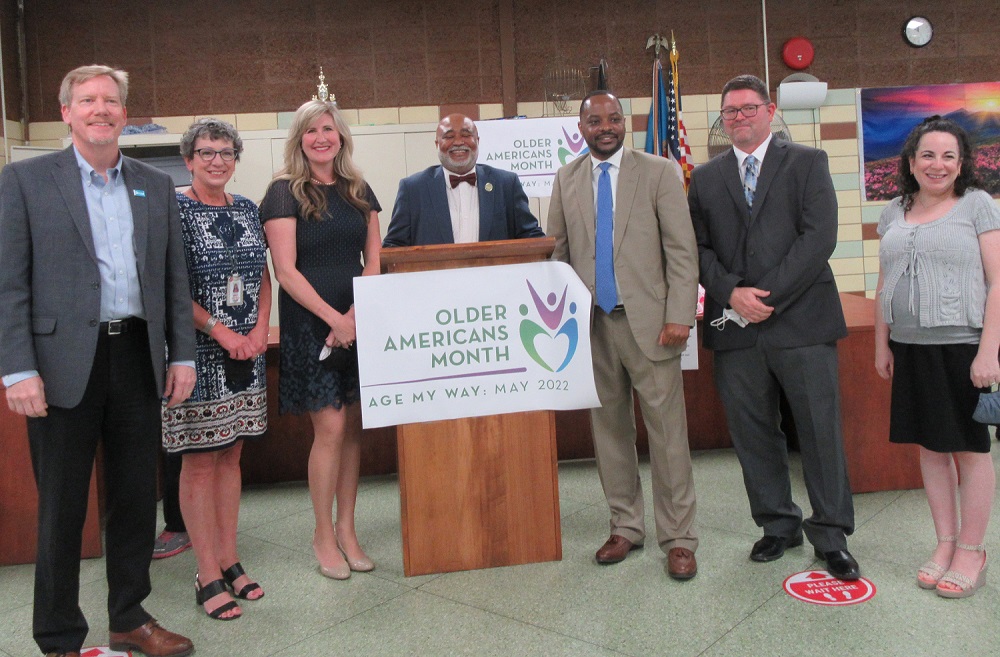
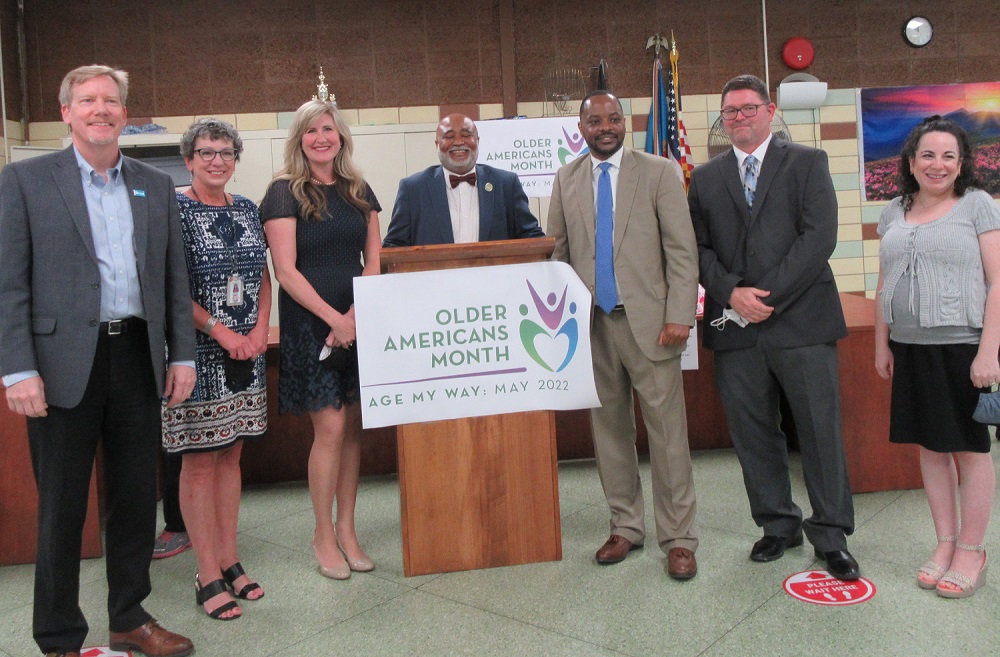
    NEW CASTLE (May 19, 2022) – During Older Americans Month, the Department of Health and Social Services’ (DHSS) Division of Services for Aging and Adults with Physical Disabilities (DSAAPD) on Thursday announced a partnership with Habitat for Humanity of New Castle County to support its Healthy Homes Program as a way to support older Delawareans to age safely in their own homes.

    DSAAPD will provide funding to allow Habitat for Humanity to expand Healthy Homes to older Delawareans as part of a pilot in New Castle County. Healthy Homes addresses home health hazards in order to keep homes dry, clean, ventilated, pest-free, contaminant-free and maintained. The program helps low-income homeowners impacted by age, disability and family circumstances reclaim their homes with pride and dignity.

    The pilot, which will begin in the Route 9 Corridor just south of Wilmington, was announced Thursday during an event at the Rose Hill Community Center near New Castle. Officials said the pilot will help gauge the need for funding for similar services in central Delaware and Sussex County. A state senator who represents the pilot area was instrumental in bringing the possibility of such a partnership to Delaware.

    “Our progress as a state can be measured by how we treat our most vulnerable residents,” said state Senator Darius Brown, D-Wilmington. “With 1 in 5 Delawareans over the age of 65, we have a responsibility to make sure the people who raised us, who provided for us and who worked hard to create a better world for us to inherit are well taken care of in their senior years,” he said. “I want to thank the Delaware Division of Aging and Habitat for Humanity for answering the call with a creative, community-focused partnership that will provide direct care to our most vulnerable seniors where they need it most– right in their own homes. I look forward to seeing older residents in the Route 9 Corridor get the helping hand they deserve, and I hope to see this program expanded to other deserving seniors elsewhere in our state very soon.”

    “Supporting older Delawareans in their pursuit to age with health and independence in the community of their choice is a priority of the Division of Services for Aging and Adults with Physical Disabilities,” said DSAAPD Director Melissa Smith. “This partnership with Habitat for Humanity of New Castle County is a critical step in supporting Delawareans to safely age in their homes and communities by offering much-needed minor home repairs to help make that happen.”

    “Habitat for Humanity is just as focused and concerned with sustaining homeownership as it is on creating new homeownership opportunities,” said Kevin L. Smith, Chief Executive Officer of Habitat for Humanity of New Castle County. “We appreciate this new partnership with the State of Delaware to help seniors age in place and stay in their homes.”

    The pilot will target:

    • Low-income Delawareans aged 60 and older.
    • Individuals who own home or have approval of the homeowner.
    • Accessibility, safety, and minor home repairs.
    • Residents in New Castle County starting in the Route 9 Corridor area, working with community partners to identify participants.

    The following are examples of Healthy Homes services that may be available through this project:

    • Sidewalk or step repair
    • Wheelchair ramps
    • Carpet removal for people with asthma
    • Energy-efficiency services
    • High-height toilets
    • Grab bar installation
    • Smoke detector installation
    • Pest removal

    Before the pilot program launches officially, individuals 60 or older in need of minor home repair services in the Route 9 Corridor should call Habitat for Humanity of New Castle County at 302-652-0365 to start the application, or the Delaware Aging and Disability Resource Center at 1-800-223-9074 for more information.

    Brickworks

    Group photo: At the announcement Thursday morning at Rose Hill Community Center near New Castle (from left): Habitat for Humanity of New Castle County CEO Kevin L. Lewis, Division of Services for Aging and Adults with Physical Disabilities (DSAAPD) Chief Administrator Cynthia Mercer, DSAAPD Director Melissa Smith, state Representative Franklin Cooke, state Senator Darius Brown, DSAAPD Deputy Director Brian Bayley, and Julie P. Devlin, Executive Assistant to the DSAAPD Director.

    Delaware Health and Social Services is committed to improving the quality of the lives of Delaware’s citizens by promoting health and well-being, fostering self-sufficiency, and protecting vulnerable populations.

    Media Advisory: Kickoff Event For Healthy Homes Program Pilot Partnership In Route 9 Corridor


    BEGIN readspeaker div
    Listen

    END readspeaker div

    DHSS Press Release

    [type=HTMLEDIT name=”Content”]

    Molly Magarik, Secretary

    Jill Fredel, Director of Communications

    302-255-9047, Cell 302-357-7498

    Email: jill.fredel@delaware.gov

    Date: May 18, 2022

    DHSS-05-2022

    WHAT:

    DHSS Division of Services for Aging and Adults with Physical Disabilities (DSAAPD) Melissa Smith will host state Senator Darius Brown, state Representative Franklin Cooke, and Kevin L. Smith, Chief Executive Officer of Habitat for Humanity of New Castle County as they announce a pilot partnership to support older Delawareans in the Route 9 Corridor to age safely and with dignity in their own homes.

    WHEN:

    11:30 a.m. Thursday, May 19

    WHERE:

    Rose Hill Community Center (senior center), 19 Lambsons Lane, New Castle

    WHO:

    Melissa Smith, Director, Division of Services for Aging and Adults with Physical Disabilities (DSAAPD)

    State Senator Darius Brown

    State Representative Franklin Cooke

    Kevin L. Smith, CEO, Habitat for Humanity of New Castle County

    DETAILS:

    During Older Americans Month, DSAAPD will announce a partnership with Habitat for Humanity of New Castle County to provide funding to the nonprofit to expand its Healthy Homes Program. The pilot program in the Route 9 Corridor will support eligible Delawareans age 60 or older who own their homes or have the permission of landlords and who need minor home repairs such as sidewalk or step repair, wheelchair ramps or mold remediation.

    Delaware Health and Social Services is committed to improving the quality of the lives of Delaware’s citizens by promoting health and well-being, fostering self-sufficiency, and protecting vulnerable populations.

    DPH Offers Guidance And Resources On How To Navigate The Infant Formula Supply Shortage

    DOVER (May 17, 2022)– The Division of Public Health (DPH) is providing guidance to families struggling to find formula due to a shortage caused by a supply chain issues, including avoiding taking certain measures that could be harmful to their infant’s health.

    DPH sent out a letter from U.S. Department of Health and Human Services (HHS), Health Resources and Services Administration’s Maternal and Child Health Bureau to families and maternal child health stakeholders, offering individuals information on how to safely navigate the shortages.

    Parents and caregivers are offered the following guidance:

    • Talk to your doctor: Families should consult their pediatrician to discuss the best options for their child. Doctors can provide guidance on comparable formula and specialized formula to meet their babies’ medical and nutrition needs.
    • Consider a substitute formula: For most babies, it is OK to use a similar version of their formula if their regular brand of formula is not currently available. Talk with your baby’s pediatrician about alternatives.
    • Check the manufacture’s site online for formula availability before going to a store to purchase.

    DPH reminds parents/guardians:

    • Do not make or use homemade formula: Per the American Academy of Pediatrics (AAP) and Food and Drug Administration (FDA), homemade formulas often lack or have inadequate amounts of critical nutrients vital for a baby’s growth and development and in some cases can cause infants to be hospitalized due to low calcium.
    • Never dilute formula: Watering down infant formula can be dangerous and even life-threatening, leading to a serious nutritional deficit and health issues.
    • Consider a substitute formula: For most babies, if their regular brand of formula is not currently available, using a similar version of their formula is ok. Talk with your baby’s pediatrician about alternatives.
    • If not receiving breast milk, formula should be used until your baby turns 1 year old, but if your child is over six months you can start to supplement nutrition with some solids. Talk to your pediatrician about introducing some solids like fortified cereal, mashed bananas and pureed poultry and beans.
    • Talk to your doctor: Families should consult their pediatrician to discuss the best options for their child. Doctors can provide guidance on comparable formula and specialized formula to meet their babies’ medical and nutrition needs.
    • Breastfeed your child: When possible, breastfeeding is the healthiest option for children under age 1.
    • For parents who are breastfeeding or need additional support, they may want to consider a lactation consultant or support groups, or seek assistance to access a breast pump at a low cost through your insurance provider, Medicaid, or WIC to assist with milk supply. There are also breast milk banks that properly store, test and distribute donated mothers’ milk to meet the specific needs of infants for whom human milk is prescribed by physicians. The Delaware WIC program offers breastfeeding assistance to new mothers, including peer counselors, lactation consultants and manual pumps. Details on WIC’s breastfeeding programs can be found here.

    DPH has also taken the following steps to help parents and caregivers as the supply chain issues get resolved nationwide:

    • WIC recipients have been asked to return any unused formula to the Food Bank of Delaware or another state agency food pantries.
    • WIC recipients also were granted a waiver to substitute formula this winter when supply chain issues that were made worse by a recall first emerged. A chart of formula alternatives was created to help parents and caregivers select the right formula for their child.
    • Parents who are breastfeeding or need additional support may want to consider a lactation consultant or support groups, or seek assistance to access a breast pump at a low cost through their insurance provider, Medicaid, or WIC to assist with milk supply. The Delaware WIC program offers breastfeeding assistance to new mothers, including peer counselors, lactation consultants and manual pumps. Details on WIC’s breastfeeding programs can be found here.
    • DPH reminds parents that state and community resources that could be helpful during this time are available, such as WIC, SNAP, or TANF to help with the cost of buying formula or to find other infant supplies through local food banks including the Food Bank of Delaware. DPH also offers a breastfeeding guide for mothers who want to find support or learn more about breastfeeding.

    Several birth hospitals in Delaware also offer breastfeeding support and parent education. Individuals should check with their local hospital to see what services are offered.

    Delawareans are encouraged to visit dethrives.com for up-to-date information on Delaware’s response to the infant formula supply chain issues, call 211 for community resources and services near you, or follow DEThrives and DPH on Facebook and Instagram.

    Delaware Health and Social Services is committed to improving the quality of the lives of Delaware’s citizens by promoting health and well-being, fostering self-sufficiency, and protecting vulnerable populations.

    Dr. Karyl Rattay Announces Departure From Delaware Division Of Public Health Effective June 30, 2022

    DOVER, DE (MAY 13, 2022)– Today, Dr. Karyl Rattay is announcing that she will be leaving her role as Director of the Delaware Division of Public Health (DPH) effective June 30, 2022. Dr. Rattay assumed her position in 2009, during the H1N1 influenza pandemic, and is the nation’s longest serving Public Health Director.

    As Delaware’s State Health Official, Dr. Rattay leads nearly 1,000 employees who promote health, reduce health inequities, and protect Delawareans from disease, environmental hazards, and public health emergencies.

    “It has been the greatest honor of my lifetime to serve Delawareans in this role, said Dr. Rattay. “I am grateful for the opportunity to have served under Governor Carney, and Governor Markell before him. I could not be prouder of the DPH team and what we have accomplished together over the past 13 years.”

    “When you work with someone through a crisis, you really see what they’re made of. Dr. Rattay is smart, steady, focused, and committed,” said Governor John Carney. Most importantly though, she is kind and compassionate. Her style of leadership and her work ethic are what helped Delaware make it through this pandemic. And the work Dr. Rattay did at Public Health in the decade leading up to the pandemic is why her team was ready and able to step up and manage this crisis. We will miss Dr. Rattay as a member of our team and I am personally grateful to her for all she did to lead us through this once-in-a-generation public health crisis.”

    “In her 13 years as our Director of the Division of Public Health, Dr. Karyl Rattay has been driven by a singular focus: How could she and her team improve and protect the health and well-being of the Delawareans they serve,” said Department of Health and Social Services (DHSS) Secretary Molly Magarik. “Her values, her work ethic and her passion for this work have never wavered. She believes in meeting communities where they are, listening to stakeholders across the spectrum, and building public health responses that are tailored to the populations we are serving. On behalf of the employees of DHSS and the people of Delaware, I offer my heartfelt gratitude to Dr. Rattay her leadership, her innovative spirit, and her commitment to our state.”

    Dr. Rattay says leading the state through the COVID-19 pandemic over the last two years– the greatest public health crisis in a century– has tested those in public health departments professionally and personally. She indicated that while she is not ready to announce her next role, she is excited about the new opportunities in front of her and believes this is a good time to transition the Division to its next leader.

    During her tenure at DPH Dr. Rattay and her team have:

    • Succeeded in becoming one of the first 16 states in the nation to achieve and maintain full accreditation from the national Public Health Accreditation Board (PHAB).
    • Launched the State’s first Health Improvement Plan and multi-year agency strategic plans.
    • Significantly reduced infant mortality rates by nearly 30% from 2015– 2019 through close collaboration with many maternal and child health partners, and a 25% reduction in unintended pregnancies through the Delaware Contraceptives Access Now (Delaware CAN) initiative.
    • Saw a 14% reduction in cancer mortality rates through a comprehensive statewide prevention, screening, and treatment initiative.
    • Worked with the legislature to pass a bill increasing the age to buy tobacco products to 21 and adding e-cigarettes to Delaware’s Clean Indoor Air Act.
    • In conjunction with the University of Delaware and Delaware Community Foundation, spearheaded the creation of the Healthy Communities Delaware (HCD) initiative– a placed-based partnership with communities to address their most important social determinants of health.
    • Played the state’s leading role in responding to multiple health threats, including COVID-19, H1N1, Superstorm Sandy, Ebola, Zika virus, Tuberculosis outbreaks and others.
    • Launched the My Healthy Community data portal in 2019, bringing Delaware public health data down to the ZIP code level, including community characteristics, the environment, chronic disease, and mental health and substance use, air quality, asthma incidence data, public and private drinking water results, and drug overdose and death data. In 2020, when the COVID-19 pandemic began, the Division of Public Health used My Healthy Community to report COVID-19 data, again down to the ZIP code level in many cases. It was one of the most robust COVID-19 data sites in the country.
    • Assumed a leadership role in addressing the state’s opioid crisis.
    • Added the Medical Marijuana Program in 2014 to administer medical marijuana cards for eligible Delawareans and to license and oversee compassion centers in all three counties.
    • Added the Office of Animal Welfare in 2013 based on the recommendations of the General Assembly Animal Welfare Task Force as a way to consolidate and coordinate animal companion programs in Delaware.

    Dr. Rattay has earned multiple honors and awards. In 2019, she was awarded the prestigious Arthur T. McCormack Award by the Association of State and Territorial Health Officials (ASTHO) for her leadership and contributions as a state health official. She also received the Vision of Peace award from the Delaware Coalition Against Domestic Violence; the Health Professional of the Year award from the National Alliance on Mental Illness; the President’s Award three times from former Medical Society of Delaware presidents; the Medal of Honor Award from atTAcK addiction and was honored by Governor Carney as the longest-serving state health official in the nation.

    She has been named as one of “Delaware’s Most Influential” individuals for 2020 and 2021. Dr. Rattay chairs the Healthy Babies Subcommittee for ASTHO and is a Board member of ASTHO and the Public Health Foundation. She is the Chair of Delaware’s Addiction Action Committee, Co-Chair of the Overdose System of Care Committee, and a current member and former president of the Delaware Board of Medical Licensure and Discipline.

    Dr. Rattay earned a Medical Doctorate from the Medical University of Ohio in 1992 and a Master of Science in Epidemiology from the University of Maryland in 2001. She completed her Pediatric Residency at Georgetown University and a Preventive Medicine and Public Health Residency training program at the University of Maryland.

    Dr. Rattay is board-certified in pediatrics and practiced pediatrics for 14 years. Between September 2001 and June 2004, she served as a senior public health advisor to the U.S. Surgeon General and Assistant Secretary of Health in the Office of Disease Prevention and Health Promotion, Department of Health and Human Services, where she had a leadership role in the President’s Healthier U.S. Initiative.

    Delaware Health and Social Services is committed to improving the quality of the lives of Delaware’s citizens by promoting health and well-being, fostering self-sufficiency, and protecting vulnerable populations.

    Delaware Division Of Public Health Diabetes & Heart Disease Prevention & Control Program To Sponsor 20th Annual Diabetes Wellness Expo At Delaware State Fairgrounds

    DOVER, DE (MAY 9, 2022) – The Delaware Division of Public Health’s (DPH) Diabetes & Heart Disease Prevention & Control Program (DHDPC) and the Delaware Diabetes Coalition are co-sponsoring the 20th Annual Diabetes Wellness Expo on May 10, 2022, at the Delaware State Fairgrounds in Harrington, Delaware. The event is free to the public and will be held in the Kent Open Air Barn from 9:00 a.m. to 3:00 p.m..

    More than 96,800 Delaware adults reported in 2020 that they had been diagnosed with diabetes, according to Delaware Behavioral Risk Factor Survey. The survey also shows 75,100 additional Delaware adults reported being diagnosed with pre-diabetes. Progression to type 2 diabetes can be prevented or delayed by losing weight, engaging in at least 150 minutes of physical activity weekly, and improving one’s diet.

    People with diabetes, pre-diabetes, caregivers, employers, and health professionals are encouraged to attend the Diabetes Wellness Expo to learn how to prevent complications of the chronic disease, such as kidney failure, adult blindness, lower-limb amputations, heart disease, and stroke.

    About the Annual Diabetes Wellness Expo

    More than 50 exhibitors and educational seminars will provide information about diabetes management, nutrition, exercise, medication adherence, foot care, and depression. Diabetes and blood pressure screenings, cooking demonstrations, dental and eye exams, and COVID-19 vaccinations are offered at no cost. Complimentary $10 lunch vouchers for onsite food trucks will be available on a first-come, first-served basis. Additional co-sponsors include DPH’s Physical Activity, Nutrition and Obesity Prevention Program, Bayhealth, Simon Eye Associates, and AmeriHealth Caritas Delaware.

    To register or become a vendor for the Diabetes Wellness Expo, visit https://www.dediabetescoalition.org/wellness-expo/. For more information about the Diabetes Wellness Expo, send questions to director@dediabetescoalition.org or call the Delaware Diabetes Coalition at 302-388-9728.

    To learn more about diabetes management and prevention programs and resources, visit https://www.healthydelaware.org/Individuals/Diabetes# knowing or call DPH’s Diabetes and Heart Disease Prevention and Control Program at 302-744-1020.

    Delaware Health and Social Services is committed to improving the quality of the lives of Delaware’s citizens by promoting health and well-being, fostering self-sufficiency, and protecting vulnerable populations.

    Dhss Releases Second Annual Health Care Benchmark Trend Report

    NEW CASTLE (May 5, 2022) – Department of Health and Social Services (DHSS) Secretary Molly Magarik presented the State’s second annual Benchmark Trend Report at today’s Delaware Health Care Commission (DHCC) meeting. This report displays trends in Delaware’s health care spending and quality, comparing new 2020 data against a set benchmark, as well as baseline data from 2019. This report continues the State’s efforts to improve health care quality for all residents, while simultaneously working to monitor and reduce the economic burden of health care spending.

    In November 2018, Governor John Carney signed Executive Order 25, establishing a state health care spending benchmark, an annual per-capita-rate-of-growth benchmark for health care spending, and multiple health care quality measures that are to be evaluated and adjusted every three years.

    The first spending benchmark went into effect on Jan. 1, 2019, and was set at 3.8%. That spending benchmark was not met, as the finalized health care spending for 2019 grew at a rate of 5.8%. For calendar year 2020, the spending benchmark was set at a more ambitious target of 3.5%. This benchmark was met as the 2020 Total Health Care Expenditures (THCE) per-capita change from the prior year was estimated at -1.2%. Total expenditures encompasses health care spending associated with Delaware residents from private and public sources. Total Health Care Expenditures increased by $39 million in calendar year 2020, totaling $8.1 billion. However, with Delaware’s population increasing by 1.7% from 2019 to 2020, the per-capita total decreased from $8,268 in 2019 to $8,173 in 2020.

    “While the decreases in per-capita health care spending and the spending growth rate appear at first glance as a positive change, it is important to note that the COVID-19 pandemic had a significant impact on preventative health care services, health care facility utilization, service delivery, and payer/provider finances,” Secretary Magarik said. “These benchmark findings need to be viewed in the context of the extraordinary circumstances we faced in 2020. And that makes equitable comparisons with previous calendar years extremely difficult.” “The report continues to showcase the need to lower costs and improve quality in Delaware,” said Steven Costantino, DHSS’ Director of Health Care Reform. “We need to continue to move toward a more value-based care system so that health care is more affordable for all Delawareans. The benchmark has proven to be a useful tool in driving reform and targeting initiatives to improve health care delivery.”

    The 2020 Trend Report also provides insight into Delaware’s health care quality by presenting data on six quality measures.

    “Unfortunately, the results of the quality measures are mixed,” Secretary Magarik said. “While Delaware made progress in some important measures, the report shows us there is still significant work to be done to improve the health of Delawareans in other areas. At DHSS, we look forward to working with health care providers, insurers, legislators, businesses, other government leaders and, most importantly, consumers to help build a healthier Delaware.”

    Overview of Quality Results:

    • Adult obesity:The benchmark for 2020 was to reduce the percentage of Delaware adults who are obese to 29.4%. The 2020 result: 36.5%; an increase from 2019 and 7.1 percentage points higher than the benchmark.
    • Use of opioids at high dosages: This is a new benchmark for 2020, which used the Delaware Prescription Monitoring Program to observe the rate at which high-dose opioids were prescribed. The 2020 benchmark: 12.4%; the 2020 result: 11.1%. This is a positive observation.
    • Opioid-related overdose deaths: The benchmark for 2020 was to reduce the mortality rate to 15.5 deaths per 100,000. The 2020 result: 43.9 deaths per 100,000. This is an increase from 2019.
    • Emergency department utilization: The National Committee for Quality Assurance (NCQA) significantly changed the methodology for this quality measure, so it was given first-year status and no calendar year 2020 data was reported.
    • Persistence of beta-blocker treatment after a heart attack: The benchmark rate for 2020 was to increase the percentage of patients who receive beta-blocker treatment to 84.9% of commercial insurance patients and to 80.1% for Medicaid patients. The 2020 results: 91.7% for commercial insurance patients and 78.1% for Medicaid patients. While the Medicaid patients did not reach the benchmark, this is a significant improvement from the 2019 results of 73.5%.
    • Statin therapy for patients with cardiovascular disease: The benchmark rate for 2020 was to increase the percentage of patients who receive statin therapy to 80.5% of commercial insurance patients and 61.5% for Medicaid patients. The 2020 results: 83.6% for commercial insurance patients; 72.6% forMedicaid patients. For both markets, results were better than the respective benchmark.

    To learn more about the health care spending and quality benchmarks, visit the Health Care Commission website.

    Delaware Health and Social Services is committed to improving the quality of the lives of Delaware’s citizens by promoting health and well-being, fostering self-sufficiency, and protecting vulnerable populations.

    Dhss Launches State Health Care Provider Loan Repayment Program

    NEW CASTLE (May 4, 2022) – The Department of Health and Social Services (DHSS) has launched a state-sponsored Health Care Provider Loan Repayment Program (HCPLRP). Under the new loan repayment program, eligible clinicians may receive up to $50,000 per year in loan repayment for a maximum of four years of employment in Delaware.

    Governor John Carney signed
    House Bill 48 with House Amendment 1 on Aug. 10, 2021, establishing the loan repayment program administered by the Delaware Health Care Commission (DHCC). The program is a valuable tool to incentivize providers to practice in Delaware, in addition to attracting more providers to the state’s primary care workforce.

    “We are grateful to Governor Carney and to the General Assembly for their support of the Health Care Provider Loan Repayment Program,” said DHSS Secretary Molly Magarik. “It’s clear that we need to find ways to attract more primary care providers to practice in Delaware, and this state-sponsored program is a strategic way to do that.”

    “When it comes to health care, Delawareans deserve to be treated by highly trained professionals at medical facilities statewide,” said Rep. David Bentz, the lead sponsor of House Bill 48. “However, we are facing a shortage of doctors as the demand for them grows. That’s why we passed HB 48, which offers an attractive incentive to Delaware students in residency programs here, as well as establishes an education loan repayment program for medical professionals who currently work in Delaware. With this law, we can work toward recruiting and retaining top primary care doctors. I’m grateful to the Delaware Health Care Commission for taking a leadership role in running the grant program and ensuring that we have more health care workers throughout the state, including in underserved communities.”

    In Fiscal Year 2022, the General Assembly allocated $1 million in state funds to support the loan repayment program. The Delaware Health Care Commission also received, in December 2021, a $1 million one-time contribution from Highmark Blue Cross Blue Shield Delaware. For Fiscal Year 2023, beginning July 1, 2022, the Governor’s Recommended Budget has proposed an additional $1 million in state funds to support the program.

    “The Delaware Health Care Commission is excited to be able to implement HB48 and offer health care providers, who are interested in practicing in Delaware, worked to address this crisis through the development of the Health Care Workforce Subcommittee; supporting education through Delaware Institute of Medical Education and Research (DIMER) and (Delaware Institute of Dental Education and Research (DIDER); providing practice sustainability through the Primary Care Reform Collaborative; and now incentivizing providers to practice in Delaware with the State Health Care Provider Loan Repayment Program,” said Dr. Nancy Fan, Chair of the Delaware Health Care Commission and a practicing OB/GYN. “We are excited to be able to implement HB48 and offer primary care providers, who will be practicing in Delaware, meaningful financial relief, so they can build a sustainable practice and increase access for our patients to quality, affordable care.”

    “Qualifying clinicians must be a new primary care provider in an ambulatory or outpatient setting and completed graduate education within six months of the application for HCPLRP being submitted. Eligible health care providers include physicians practicing family medicine, internal medicine, pediatrics, obstetrics/gynecology, geriatrics, and psychiatry as well as Nurse Practitioners, Certified Nurse Midwives, Clinical Nurse Specialists, and Physicians Assistants practicing adult medicine, family medicine, pediatrics, psychiatry/mental health, geriatrics, and women’s health.

    Employers may apply on behalf of their affiliated, qualifying clinicians for education loan repayment grants. These sites may include:

    • Hospital primary care practices
    • Private practices
    • Federally Qualified Health Centers
    • Community outpatient facilities
    • Community mental health facilities
    • Free medical clinics

    For awards issued to practitioners employed by Delaware health care facilities, hospitals and health systems must provide a 50% match for loan repayment awards.

    Priority consideration will be given to Delaware Institute of Medical Education and Research (DIMER)-participating students and participants in Delaware based residency programs. Delaware is one of four states that does not have its own medical school. To accommodate the growing demand for primary care physicians across the state, the General Assembly created DIMER to support affiliated agreements with two medical schools in Philadelphia: Philadelphia College of Osteopathic Medicine (PCOM) and Thomas Jefferson, Sidney Kimmel Medical College (SKMC). A minimum of 120 academic seats are reserved annually (80 at Sidney Kimmel and 40 at PCOM) for Delaware residents applying to an allopathic or osteopathic degree program. New DIMER graduates are eligible for HCPLRP.

    Delaware’s Health Care Provider Loan Repayment Program application is available online.

    Applications are now accepted on a rolling basis and will be reviewed on the following schedule:

    • June 1, 2022*
    • Aug. 1, 2022*
    • Oct. 1, 2022

    * Applicants in the June 1 and August 1 review cycles must have completed their graduate medical education by July 2021 or sometime thereafter. Applicants in the Oct. 1 review cycle must complete their graduate education by 2022 or sometime thereafter.

    In addition to the state-sponsored Health Care Provider Loan Repayment Program, Delaware has operated a federal state loan repayment program (SLRP) supported by the Health Resources and Services Administration of the U.S. Department of Health and Human Services. SLRP offers similar incentives: up to $200,000 for four-year contractual agreements to provide services in federally designated Health Professional Shortage Areas. Where SLRP differs from HCPLRP is in designated areas of need, eligible professional disciplines, types of health care employment facilities that qualify, and date of graduation in respective disciplines.

    To learn more about Health Care Provider Loan Repayment Program and the federal state loan repayment program, visit: Loan Repayment Programs.

    Delaware Health and Social Services is committed to improving the quality of the lives of Delaware’s citizens by promoting health and well-being, fostering self-sufficiency, and protecting vulnerable populations.

    Delaware’S Division Of Developmental Disabilities Services Announces Columbus Organization As Targeted Case Management Entity

    DOVER (May 4, 2022)– The Delaware Division of Developmental Disabilities Services (DDDS) announced today that the Columbus Organization will continue to operate as the Division’s Targeted Case Management Provider, providing case management support to individuals with intellectual and developmental disabilities and their families across the State. Targeted Case Management through the Columbus Organization provides each individual and family with access to a Community Navigator ensuring a person-centered planning approach that supports individuals receiving services to live their best life.

    “Our Division’s top priority is to ensure every individual we serve, and their family, can access the services and supports they need to lead the life they want to live,” said Marissa Catalon, Director of the Division of Developmental Disabilities Services. “Columbus’s Community Navigators do just that by connecting individuals to the communities they live in.”

    The Columbus Organization works to serve individuals with intellectual and developmental disabilities by making connections to services and supports in the community. Those include access to, for example, supported employment services and day services, behavioral supports, or assistive technologies. They also support families in gaining access to respite services and home or vehicle modifications.

    Carlos Hernandez, Senior Vice President with the Columbus Organization, shared his enthusiasm for this opportunity to continue partnering with DDDS. “We look forward to continuing our partnership with DDDS and to making a significant impact on the lives of so many people in Delaware. Beyond the benefits of maintaining continuity of care for these individuals, we also believe that Columbus’ complex care model, state-of-the-art training and analytics tools, and dedicated Quality Assurance team, will contribute greatly to helping individuals achieve their meaningful life-goals while improving health outcomes.”

    DDDS began working with the Columbus Organization in July 2017 when the Division first implemented Targeted Case Management Services. Over the past five years, Columbus has maintained an excellent record of Medicaid compliance. The nonprofit’s average compliance scores are consistently in the 90th percentile; this year its Medicaid compliance scores range from 95% to 98%.

    The Columbus Organization will continue to provide services primarily to individuals with intellectual and developmental disabilities (IDD) living in their own home or in their family home. DDDS has additional case management and resource coordination services for individuals with IDD living in provider-managed residential settings and for those individuals served by the Diamond State Health Plan Plus– a Medicaid Long-Term Services and Supports (LTSS) program.

    DDDS is one of 11 divisions in the Department of Health and Social Services. It serves more than 5,000 service recipients statewide.

    Delaware Health and Social Services is committed to improving the quality of the lives of Delaware’s citizens by promoting health and well-being, fostering self-sufficiency, and protecting vulnerable populations.

    May Is Viral Hepatitis Awareness Month; May 19 Hepatitis Testing Day

    Dover (May 4, 2022)– The Division of Public Health (DPH) is announcing May as Viral Hepatitis Awareness Month and May 19 as Hepatitis Testing Day. There are several different viruses that can cause hepatitis. The most common type of viral hepatitis are hepatitis A, hepatitis B, and hepatitis C. Both hepatitis A and hepatitis B are preventable with vaccines and while there is no vaccine for hepatitis C, it is curable with proper treatment. Hepatitis B and C are the leading causes of liver cancer in the United States. The only way to know if you have a viral hepatitis is to get tested.

    It is estimated that 2.4 million people in the United States are living with hepatitis C and between 880,000 and 1.89 million people are living with hepatitis B. Many are unaware that they are infected since symptoms usually are slow to present themselves. The Centers For Disease Control and Prevention (CDC) suggests everyone should get tested for viral hepatitis at least once in their lives. Some of the risk factors for contracting viral hepatitis include but are not limited to:

    • Individuals born between 1945 and 1965
    • IV drug users
    • Unstable housing
    • Travel to an area with endemic hepatitis A virus without being immunized
    • Unprotected sex with multiple partners
    • Job that exposes you to human blood

    “The Viral Hepatitis Program has been hard at work to build up the program’s outreach, prevention, and surveillance measures over the past year,” said DPH Treatment Program Administrator for the Viral Hepatitis and Vaccine Preventable Disease Programs Victoria Pyne, MA. “Viral hepatitis is preventable and DPH’s viral hepatitis team is making efforts to raise awareness of the issue and encourage people to get tested at least once, as well as getting vaccinated for hepatitis A and hepatitis B. Without testing, undiagnosed and untreated cases can lead to significant health complications. During Viral Hepatitis Awareness Month, we encourage people to get tested, learn the risks, and help the prevent of the spread of viral hepatitis.”

    For greater detail on the risk factors and disease information on each form of viral hepatitis, you can visit the CDC website:

    For more information, or to report a viral hepatitis case, call DPH’s Viral Hepatitis program at 302-744-4990.

    Anyone who is deaf, hard of hearing, Deaf-Blind or speech disabled can contact DPH by dialing 711 first using specialized devices (i.e. TTY, TeleBraille, voice devices). The 711 service is free and to learn more about how it works, please visit delawarerelay.com.

    DPH, a division of DHSS, urges Delawareans to make healthier choices with the 5-2-1 Almost None campaign: eat 5 or more fruits and vegetables each day, have no more than 2 hours of recreational screen time each day (includes TV, computer, gaming), get 1 or more hours of physical activity each day, and drink almost no sugary beverages.

    Delaware Health and Social Services is committed to improving the quality of the lives of Delaware’s citizens by promoting health and well-being, fostering self-sufficiency, and protecting vulnerable populations.